
Asbestos
With over three decades of experience and a full licence to operate with asbestos,we handle everything from testing to disposal.
We oversee your project to neutralize the danger.
What must employers and workers do before beginning renovation or demolition work?
Before renovation/demolition:
Employers and owners/builders are responsible for the health and safety of workers employed on the site. They must have a qualified person inspect the site to identify any asbestos that may be handled, disturbed, or removed. For more information on acceptable credentials for asbestos consultants, refer to OHS Guideline G6.6-3: Qualifications, part of the Occupational Health and Safety Regulation materials at WorkSafeBC.com. The removal must be done by trained and qualified workers using the proper protective equipment. For more information on working safely around asbestos WorkSafeBC.com – OHS Guideline G6.6-3
What can homeowners do?
If you are a homeowner doing your own renovations and not employing other workers, you will want to take precautions to avoid inhaling asbestos fibres and contaminating your home. Asbestos-containing materials should be identified and removed by someone trained in asbestos removal and wearing protective clothing and a respirator. Contact your municipality to find out how to dispose of asbestos-containing materials so that they do not contaminate landfills. Contact the Canada Mortgage and Housing Corporation at at 1.800.668.2642 (CMHC) / 604.666.2083 (Health Canada).
What are the hazards of asbestos?
Renovating or demolishing houses containing asbestos products can release asbestos fibers, which are extremely fine and can stay in the air for hours. Breathing in asbestos fibers may cause serious health problems, including lung disease and cancer. Asbestos is the name given to scarring and stiffening of the lungs caused by inhaling asbestos dust over many years. It makes breathing difficult and may lead to fatal diseases such as pneumonia and heart disease. Exposure to asbestos can also cause lung cancer and mesothelioma, which is a rare cancer of the linings of the lungs and abdomen. Asbestos-related diseases usually develop many years after a person has been exposed to asbestos. The risk of developing these diseases increases with the amount of asbestos in the air you inhale and the length of time you are exposed. Smokers are at an increased risk.
Where was asbestos used in older homes?
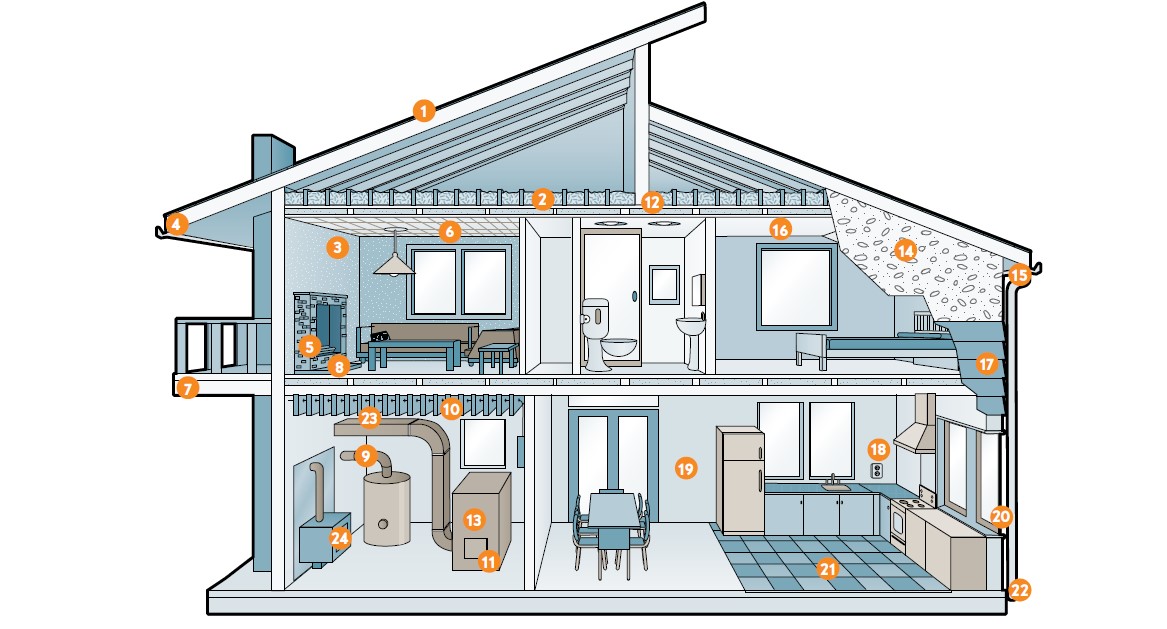
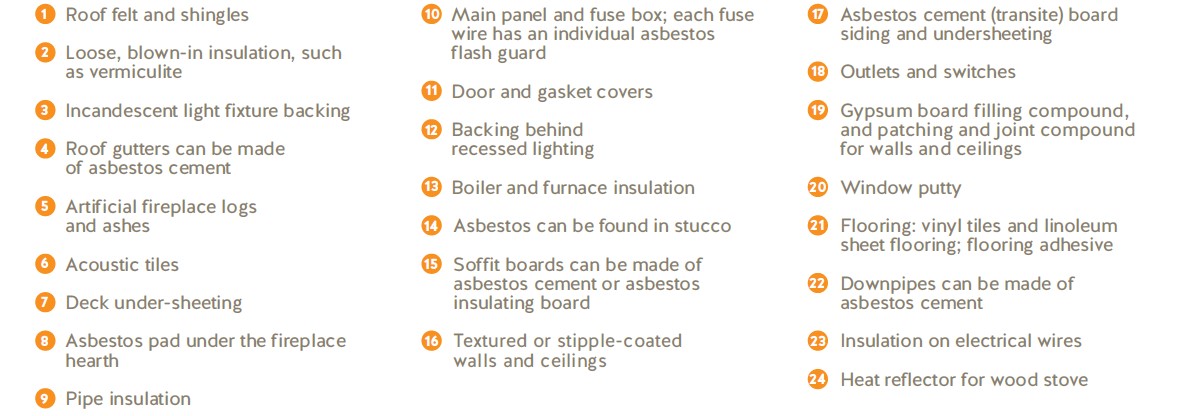
Until the early 1980s, many products containing asbestos were used in house construction. Some products, such as asbestos containing vermiculite insulation, were used in homes right up until the late 1980s. The drawing in this pamphlet shows many possible sources of asbestos in older homes. When you are renovating or demolishing an older house, there is a high probability of encountering asbestos-containing materials. If asbestos-containing materials are in good condition and left intact, they do not pose a significant danger of releasing asbestos fibres into the air you breathe. However, these materials are hazardous when they deteriorate or are disturbed, such as when they are handled, sanded, drilled into, or broken up so that they crumble. To avoid disturbing asbestos-containing materials, you must know where they are before you begin renovations. We can give you the assistance you need to get rid of this hazardous substance without endangering your health if you are starting a demolition or building project that involves it. We can oversee your project to neutralize the danger. We help identify and neutralize the danger before you start.
More info & resources
Call 604-276-3100 or toll-free 1888-621-7233 , or Visit WorkSafeBC.com for:
- Safe work practices
- OHS Reg Part 6
- OHS Reg Part 20
- Guideline G20.112
- Notice of Project 52E49
- Guideline G6.8
Managing asbestos – we handle it all
We can give you the assistance you need to get rid of this hazardous substance without endangering your health if you are starting a demolition or building project that involves it. With over three decades of experience and a full license to operate with asbestos, we can handle any job.
- All types of asbestos management
- Asbestos testing (where required)
- Asbestos container hire – skips, roll on/off
- Asbestos disposal into our licensed site
Hazmat Report Submission and Appointment Requirements
To avoid any disruptions, it is critical that all hazmat reports are submitted at least two business days prior to the delivery date. This is the minimum requirement, and earlier submission is encouraged to ensure smooth processing
Reports must be emailed to accounting@northwinenv.com by the following deadlines:
For Wednesday deliveries, reports must be received by Monday at 4:00 PM
For Thursday deliveries, reports must be received by Tuesday at 4:00 PM
In addition to report submission, an appointment time must be confirmed with Northwin Environmental staff prior to arrival. Loads arriving without a confirmed appointment will be refused.
These deadlines are strict, and no exceptions will be made. Timely submission of hazmat reports and appointment confirmation are essential to maintaining compliance with our operational and regulatory requirements
PPE requirements for drivers:
For the safety of all personnel, we require that all drivers wear appropriate personal protective equipment (PPE) at our facility.
This includes, at a minimum,
- hard hat
- steel-toed boots
- high-visibility vest
Adhering to these safety protocols is non-negotiable and helps us maintain a safe working environment for everyone
Material handling requirements:
Along with PPE, ensuring the safe handling of asbestos-containing materials is critical for compliance and safety. To comply with BC Hazardous Waste Regulations (HWR) and WorkSafeBC standards outlined in Part 6 of the Occupational Health and Safety (OHS) Regulation,
all asbestos waste must be:
- Double-bagged and gooseneck-taped in approved asbestos waste bags.
- Clearly labeled with UN2590 and marked as “Asbestos” per Section 6.32 of the OHS Regulation
- Securely sealed and handled in accordance with the containment guidelines outlined in Section 6.8(3)(a–e), ensuring that no asbestos fibers are released during transportation
Together, these material handling and safety measures are designed to protect both workers and the environment. Ensuring that all steps are followed correctly is essential for meeting regulatory standards and maintaining a safe, compliant operation. We appreciate your attention to these important safety and regulatory requirements, as they help us maintain the safety and efficiency of our operations. Should you have any questions or need further information, please don’t hesitate to contact us.